
The White Poppy: Remembering for Peace
A symbol of grief for all victims of war, an urgent challenge to militarism, and an enduring commitment to building a world beyond armed conflict.
Featured Educational Resource · November 2026
Reframing Remembrance Day in Canada: A Handbook for Educators
Remembrance Day was originally founded as a commitment to end war and prevent future conflict. To help teachers, parents, and community educators bring this original spirit into classrooms, World BEYOND War Canada has created a thoughtful 13-page curriculum guide for all grade levels.
What the Handbook Includes
- The Three Meanings of the White Poppy: Clear background on remembering all victims of war (civilian and military of all nationalities), building a culture of peace, and challenging the normalization of militarism.
- Age-Appropriate Classroom Activities: Practical, engaging lesson ideas for Grades 1–3 (drawing white poppies, paper wreaths, and peace posters), Grades 4–6, and older students.
- Discussion & Reflection Guides: Trauma-informed prompts that explore peacebuilding, international solidarity, and the human and ecological impacts of military spending.
- Wearing Both Poppies: Guidance for educators and youth on how the white poppy can be worn alongside or in addition to the red poppy.
History & Symbolism of the White Poppy
A grassroots tradition of peace and mourning dating back to 1933.
The white poppy campaign was started in Britain in 1933 by the Women’s Co-operative Guild as a “definite pledge to peace that war must not happen again.” Many of the women in the Guild had lost husbands, brothers, sons, and friends in the First World War. They wanted a symbol that did not glorify conflict, but instead grieved the immense loss of life and resolved never to repeat it.
Over the past nine decades, this campaign has been continued by the British Peace Pledge Union and peace communities around the world, including Nova Scotia Voice of Women for Peace.
1. Remembering All Victims of War
Mourning civilians, children, refugees, and armed service members of all nations. In modern warfare, the vast majority of casualties and displaced people are civilians.
2. Building a Culture of Peace
Investing public resources and imagination into diplomacy, conflict resolution, care, and nonviolent alternatives rather than ever-expanding arms races.
3. Challenging Militarism & Harm
Grieving the profound environmental destruction and climate impact of military operations, and refusing to accept war as inevitable or noble.
Annual Remembrance Day Vigil in Halifax
Join us on November 11 as we gather in quiet solidarity for peace.
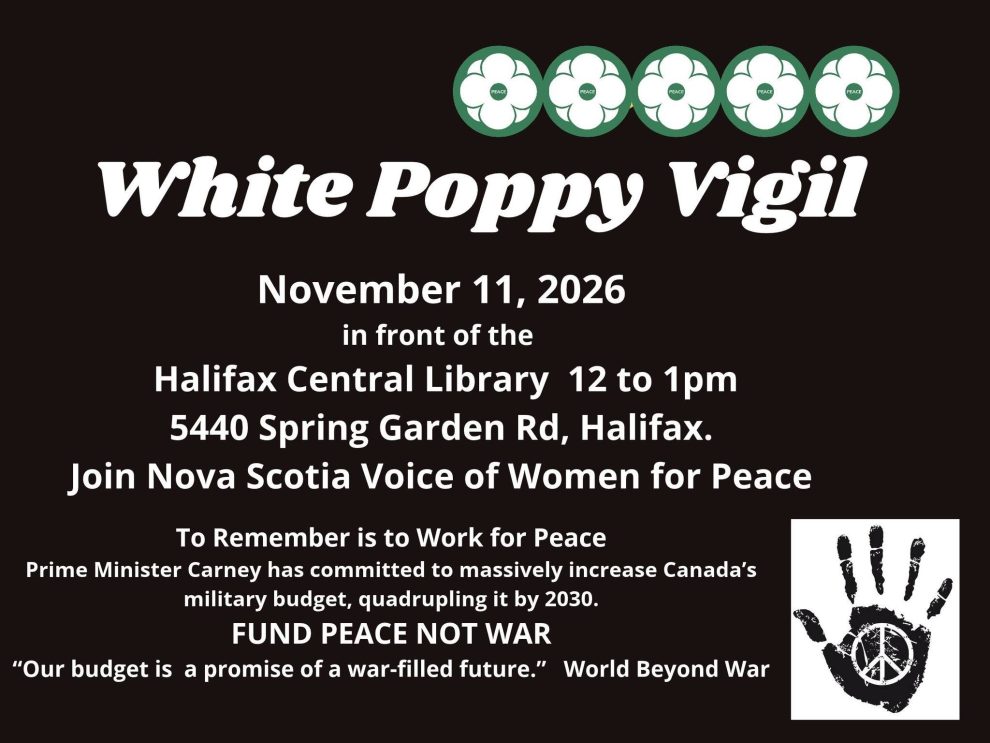
White Poppy Vigil: To Remember is to Work for Peace
Wednesday, November 11, 2026 · 12:00 noon – 1:00 p.m. AT
Location: In front of Halifax Central Library (5440 Spring Garden Road, Halifax, NS)
Each Remembrance Day, Nova Scotia Voice of Women for Peace holds a peaceful public vigil. We stand together with banners, white poppies, and shared reflection to remember all victims of war and call for funding peace, care, and climate action—not weapons. All are warmly welcome to join us.
Ways to Get Involved
Simple, meaningful actions you can take in your school, neighbourhood, or community.
Wear & Share White Poppies
Make your own white poppy from paper, felt, or cloth, or pick one up at our gatherings. Wearing it opens up gentle, reflective conversations about peace.
Bring Peace to the Classroom
Share World BEYOND War’s educator handbook with local teachers, school councils, and youth workers to support peaceful Remembrance Day activities.
Join NS VOW
Become part of our grassroots cooperative community of women and allies working for peace, disarmament, and social justice across Nova Scotia.